
Every mask was once a solution
The roles we learn to play
People don't bring only their personality to work, to friendship, to family and to relationships. They also bring their protection.
Over more than twenty years I have sat in enough teams, boards, meetings and negotiations to watch one pattern repeat itself again and again. The person who speaks loudest in the room is rarely the most certain. The person who says yes to everything is rarely the most content. The person who turns every hard moment into a joke is rarely the most carefree. The person who wants to control everything may not simply be domineering. Sometimes they are just someone for whom chaos has felt dangerous for too long.
We see behaviour and assume we are seeing the person. But very often we are seeing only the part of the person that they built out in front, so the real self could stay protected. That is where this series begins, and it is also its deepest point.
Every mask was once a solution.
No one is born with a mask. We pick it up somewhere along the way, usually much earlier than we can later remember or put into words. And almost always there was a good reason.
A child who gets attention mostly when they perform well learns that worth comes through achievement. A child in a home where one adult's mood sets the whole atmosphere learns to read other people before they learn to know themselves. A child who was laughed at for showing tears learns that hardness is safer than softness. A child whose needs went unnoticed may learn to become invisible. A child expected to carry too much too early may learn to be the one who holds everything together.
Each of them found a solution. And the solution worked. That is exactly why we kept it.
The problem isn't that the mask appears. The problem is when the mask becomes the only way a person knows how to be safe. Because what protects you at five can start to limit you at forty.
The achiever who can no longer stop. The pleaser who no longer knows what they themselves want. The hardened person no one can reach anymore, including those they love. The controller who can't trust life until everything is under their hand. The clown who can make everyone laugh but can no longer show when they themselves are hurting.
The mask that once protected slowly begins to take away too. Rest. Closeness. Honesty. Lightness. The ability to be truly seen and truly known.
A person doesn't notice this at first, because the mask doesn't feel like a mask. It feels like character. It feels like a skill. Sometimes even like a strength. "That's just how I am."
But you are not your mask. You are the one who once needed it.
In this series I don't call any human type toxic. I don't write about people as problems to be solved, managed or tamed. That language is simple and it sells well, but it leaves the person too small. When someone hears that they are manipulative, difficult, broken or bad, they don't take the mask off. They put it on tighter.
The aim of this series is not to label anyone. The aim is to look deeper. With each mask we ask three things. What is it protecting the person from? What does it take from the person in return? And how can you reach the person behind the mask, without feeding the mask itself?
This changes a great deal. When you understand that someone's behaviour might be protection rather than attack, the way you relate to them changes too. It doesn't mean you have to allow everything. It doesn't mean you have to tolerate bad behaviour, crossed boundaries or other people's unresolved patterns at your own expense.
The opposite, in fact. Understanding is not an excuse. Understanding is more accurate seeing.
The colleague who controls everything may not be doing it to torment you. Maybe chaos is unbearable for them. The friend who turns everything into a joke may not be avoiding you. Maybe they are avoiding a feeling they can't look at yet. The partner who goes cold in conflict may not be uncaring. Maybe closeness together with tension is more dangerous for their nervous system than they can admit.
It doesn't mean you have to play along with the mask. It means you can learn to respond to the person, not only to their protection. And very often that is the first moment where something can change.
Over the next thirteen articles we look at twelve masks that people use in work, friendship, family and intimate relationships. The Achiever, who seeks worth through performance. The Pleaser, who seeks safety through approval. The Rescuer, who feels needed when they can carry others. The Tough One, who learned that softness hurts. The Critic, who protects themselves from disappointment by not letting themselves hope anymore. The Unseen, who learned that being smaller is safer.
The Controller, for whom order becomes a sedative. The Know-It-All, who feels safe when they have the answer. The Martyr, who gives a great deal but leaves their own needs unspoken. The Clown, who can turn pain into a joke. The Star, who seeks through attention the confirmation that they exist. And the Charmer, who can create contact but may not let anyone truly close.
Each of them is a story of its own, but they all speak about the same thing: how a person learns to protect themselves, and how that protection can over time turn into a prison.
In some of them you will recognise a colleague. In some, a friend. In some, your partner, parent or child. And in some, probably right where you least expect it, you will recognise yourself.
That is the point of this series. Not to teach you to sort people better, but to help you see more accurately. Others, and yourself. Without simplifying, blaming or cheap diagnosis.
Because the moment you start to see the mask, it is no longer an invisible force over you. It becomes something you can examine. Understand. Soften. And one day, maybe, set down.
Evoluna was built for exactly that moment. The moment when a person sees something in themselves and no longer wants to stay alone with it. Not to get a new label. But to get a better mirror, a clearer direction, and a more fitting person beside them.
You can begin with a self-assessment that doesn't diagnose you, but helps you see which patterns are speaking more loudly in you right now. And if you feel ready to go further, you can find a specialist, mentor, coach or therapist who can truly work with the theme.
The mask was once a solution. It served you as well as it could.
But you don't have to carry it your whole life.
And you don't have to take it off alone.
Kuidas see artikkel sind puudutab?
Kommentaarid
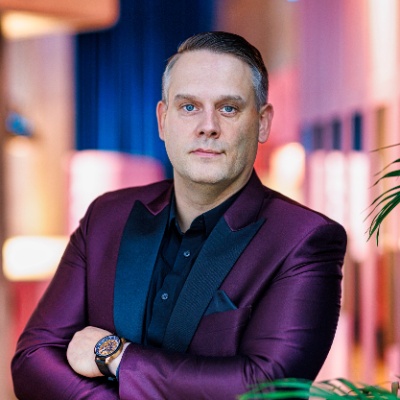
Pert Lomp
Strateegiline mentor ja süsteemide looja
Olen strateegiline mõtleja ja süsteemide looja, kes aitab inimestel ja organisatsioonidel liikuda kaosest selguse, struktuuri ja tulemuste suunas. Minu tugevus seisneb võimes näha suurt pilti ning siduda omavahel tehnoloogia, finantsid ja juhtimine tervikuks, mis päriselt töötab. Mul on üle 25 aasta kogemust erinevates rollides – alates tehnoloogia ja meedia valdkonnast kuni juhtimise, äriarenduse ja strateegilise nõustamiseni. Tegutsen täna eelkõige mentorina ja partnerina inimestele, kes on jõudnud punkti, kus järgmine samm ei vaja enam rohkem infot, vaid selgust, otsust ja suunda. Mind käivitab kasv – nii inimeste kui süsteemide tasandil. Usun, et enamik piiranguid ei tule väljastpoolt, vaid meie enda mõtteviisist, harjumustest ja uskumustest. Minu roll on aidata need mustrid nähtavaks teha, need lahti murda ning asendada need toimivate, teadlike valikutega. Minu lähenemine on kombinatsioon ratsionaalsest strateegiast ja sügavamast inimlikust mõistmisest. Töötan seal, kus kohtuvad loogika ja sisemine areng – kus otsused ei ole ainult õiged Excelis, vaid ka kooskõlas inimese tegeliku potentsiaali ja suunaga. Mentorina olen otsekohene, kohal ja tulemustele suunatud. Ma ei paku pehmendatud vastuseid, vaid selgust. Samas loon ruumi, kus inimene saab turvaliselt mõelda, näha ja kasvada. Minu jaoks on kõige suurem väärtus hetk, kus inimese sees tekib “klõps” – kui segadus asendub arusaamisega ja ebakindlus muutub teadlikuks liikumiseks edasi. Kui oled punktis, kus tead, et oled võimeline enamaks, aga vajad selgust, struktuuri ja tuge järgmise sammu tegemiseks, siis siin me kohtume.