
Every mask was once a solution: The Rescuer
Worth through being needed
You know them. When a colleague has a difficult week, they are the first to write and ask whether everything is alright. When a friend gets into trouble at three in the morning, the rescuer's phone is on. When in the family someone is going through a hard time, all the practical matters quietly end up on their shoulders, and no one even notices when that happened, because they did it so naturally.
They organise. They take care. They notice things others miss. They remember birthdays, sense when something is off, step in when there is a void and pick up tasks no one else picks up. They are the person you can rely on. The one who is always there when you need them.
And here is exactly where it gets complicated. Because for many of them, "needed" isn't only a role they take on. It is the very thing that holds the most painful question at bay: am I valuable when no one needs me?
Helping isn't the same as needing to be needed
Real helping comes from fullness. The mask of rescuing comes from fear. The person we call a rescuer may not give because they have endless reserves. Often they have learned to give because somewhere earlier, giving, carrying and being indispensable was the way to keep their place.
A child who notices that they are most loved when they are useful learns quickly that worth is something you earn through action. A child who grew up beside an adult who couldn't fully take care of themselves learns to read other people's pain before they learn to know their own. A child who was rewarded for being the responsible one, the strong one, the helpful one, may grow into an adult who doesn't even know how to ask for help themselves, because their whole identity is built on giving it.
It is intelligent adaptation. It works. The problem isn't that the mask doesn't work. The problem is that it works so well that the person can no longer tell the difference between two things. Where does my real care for the other end, and where does my fear of who I am when no one needs me begin?
For a rescuer, an empty space is rarely just empty. It often feels like a danger. Because in the empty space they are no longer holding anyone, solving anything, fixing anything. And the old logic whispers: if you aren't doing something useful, are you still wanted at all?
What this doesn't mean
It doesn't mean caring is bad. The opposite. The world genuinely needs people who notice, who take responsibility, who don't disappear when things get hard, and who show up for others when it isn't convenient. The rescuer mask has held many homes, teams, friendships and families together. Without these people, many quietly broken places would have stayed quietly broken.
It doesn't mean every helpful person is wearing a mask either. There is a real difference between a person who helps from a place of inner steadiness and a person who helps because they can't afford to stop. The first one helps and goes home. The second one helps and then can't sleep, because someone might still need them.
And it doesn't mean the rescuer is secretly trying to control others. Most rescuers aren't manipulators. They are people who genuinely care, and whose care happens to be tangled up with their own survival strategy. They don't want power over you. They want to make sure they still have a place.
How the mask shows up at work
At work the rescuer is often the person who holds the team together when leadership doesn't. They notice when a colleague is struggling, they cover for someone who is overloaded, they soften conflicts, they remember the human side of things in a system that often forgets it. They can be the emotional backbone of a team, and a great deal of quiet good gets done through them.
But the same pattern that makes them invaluable can also wear them out, and the workplace rarely sees it coming. They take on extra work because someone needed help. They stay late because someone else couldn't. They listen to the same person's troubles for the tenth time, because no one else has the patience. And slowly, an asymmetry forms. They are the one others lean on, and they have no one to lean on themselves.
The hardest part is that the system often rewards this. The rescuer becomes the unofficial caretaker. They are praised for being so dependable, so caring, so generous with their time. Promotions can even land on them precisely because they hold so much. But the praise is for the carrying, not for the person underneath. And in time, the rescuer can start to feel that they are loved for what they do, not for who they are.
In a leadership role this mask becomes especially complicated. A rescuer-leader may take responsibility away from their team because it feels easier and faster to solve things themselves. They may struggle to give feedback that disappoints anyone. They may build a culture where people learn to bring their problems to the leader and wait, rather than carry their own decisions. The team becomes dependent. The leader becomes exhausted. And the company quietly loses ownership across the whole system.
How the mask shows up in relationships
In relationships the rescuer often appears as the dream partner at first. Attentive, caring, generous, present. They notice what you need before you say it. They help without being asked. They make space for your wounds, your career, your family, your dreams. For someone who has never been cared for like this before, it can feel like finally being seen.
But over time something more uneven can appear. The rescuer keeps giving, and the relationship slowly tilts. They become the one who carries the emotional weight, organises the practical life, manages the family logistics, smooths the difficult relatives, and takes responsibility for everyone's wellbeing. And because they can't easily ask for help, no one fully realises how much they are doing, until they break, leave, or quietly grow distant inside the relationship.
A rescuer can also unconsciously choose partners who need rescuing. Someone in crisis, someone with unfinished pain, someone who can't take full responsibility for themselves. Not because the rescuer wants drama, but because next to such a partner the rescuer always knows their role. The relationship feels meaningful precisely because it is needed. And when the partner stabilises and no longer needs to be rescued, the rescuer can feel oddly lost. As if their place in the relationship has disappeared.
In friendship and family the same pattern continues. They are the one who calls, organises, remembers, helps. And often the one whose own troubles no one really knows about, because they have made it almost impossible for others to see them as someone who could also need help.
How to reach the person behind the mask
If you want to reach a rescuer, the first thing isn't to lean on them less because you feel guilty. That can confuse them, because being leant on is how they recognise their place. The work is more subtle.
Notice them when they aren't carrying anything. Tell them you enjoy being with them, not only that you are grateful for what they do. Ask how they are, and when they answer in two sentences and turn the question back to you, don't let them. Ask again. Quietly. Don't accept "I'm fine" as the full answer if your sense says otherwise.
When they help you, let them, but tell them clearly that you would still want them in your life even if they didn't. Most rescuers have rarely heard that. It can sound almost dangerous at first, as if you are taking away the very thing that gives them a place. But over time, this is what gives them permission to stop carrying everyone in order to be loved.
If you live or work with a rescuer, look at the asymmetry honestly. Who does the emotional labour here? Who keeps track of everyone's birthdays, moods, schedules, problems? If it is mostly one person, the relationship or the team is using their pattern as infrastructure, and they will pay for it in the body sooner or later. Offer to take things back. Don't ask "what can I do to help?" because they will say "nothing". Just take something on, and don't give it back.
And when they do something inconvenient, ungenerous, tired or imperfect, don't punish it. Reward it quietly. Because that is the moment they are stepping out of the mask, and they need to know that the room doesn't fall apart when they do.
If this is you
If this is you, the first thing to know is that your capacity to care for others isn't the enemy. It is real and it has built things that matter. Probably many people in your life are who they are partly because you carried something for them at some point. There is no shame in that.
But protection is not the same as freedom.
A mask that lets you feel worthy only when you are useful eventually takes from you the very thing you give to everyone else. Care. Rest. Being chosen, not for what you do, but for who you are. You may give endlessly and still feel unseen, because you suspect, deep down, that if you stopped giving, the people around you would slowly slip away. So you keep giving, and you keep doubting, and the loop never closes.
This is exhausting in a way that is hard to explain to anyone who hasn't lived it. From the outside you look strong, capable, generous. From the inside you are tired, and you don't even feel allowed to be tired, because so many people depend on you.
The good news is that this can shift. The shift isn't to stop caring. It is to learn that you are still loveable when you aren't fixing anything.
Therapy or coaching that works with attachment and inner parts, often called IFS, can help you meet the part of you that learned to earn love through usefulness, and listen to what it has been protecting you from. Somatic work can help your nervous system learn that rest is not abandonment. Working with a mentor or coach who isn't there to lean on you, but to see you, can be especially powerful for a rescuer, because it gives you, perhaps for the first time, a relationship where you don't have to carry the other person.
This is exactly what Evoluna was built for. The moment when a person who has spent their life carrying others realises that they too are allowed to be held. You can begin with a self-assessment that doesn't ask what you can do for anyone, but reflects back what is happening inside you. And if you want to go further, you can find a specialist, mentor or coach who knows how to work with this particular theme.
The mask was once a solution. It made you trustworthy, valuable and present in a world where you weren't sure your place was safe.
But you don't have to keep earning your place forever.
And you don't have to put it down alone.
Kuidas see artikkel sind puudutab?
Kommentaarid
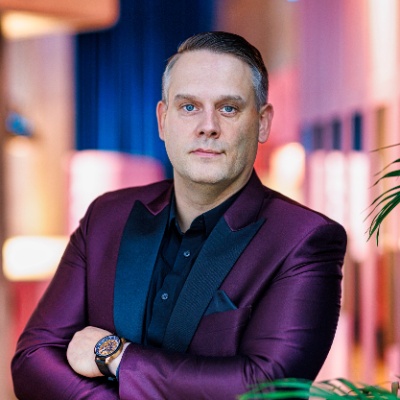
Pert Lomp
Strateegiline mentor ja süsteemide looja
Olen strateegiline mõtleja ja süsteemide looja, kes aitab inimestel ja organisatsioonidel liikuda kaosest selguse, struktuuri ja tulemuste suunas. Minu tugevus seisneb võimes näha suurt pilti ning siduda omavahel tehnoloogia, finantsid ja juhtimine tervikuks, mis päriselt töötab. Mul on üle 25 aasta kogemust erinevates rollides – alates tehnoloogia ja meedia valdkonnast kuni juhtimise, äriarenduse ja strateegilise nõustamiseni. Tegutsen täna eelkõige mentorina ja partnerina inimestele, kes on jõudnud punkti, kus järgmine samm ei vaja enam rohkem infot, vaid selgust, otsust ja suunda. Mind käivitab kasv – nii inimeste kui süsteemide tasandil. Usun, et enamik piiranguid ei tule väljastpoolt, vaid meie enda mõtteviisist, harjumustest ja uskumustest. Minu roll on aidata need mustrid nähtavaks teha, need lahti murda ning asendada need toimivate, teadlike valikutega. Minu lähenemine on kombinatsioon ratsionaalsest strateegiast ja sügavamast inimlikust mõistmisest. Töötan seal, kus kohtuvad loogika ja sisemine areng – kus otsused ei ole ainult õiged Excelis, vaid ka kooskõlas inimese tegeliku potentsiaali ja suunaga. Mentorina olen otsekohene, kohal ja tulemustele suunatud. Ma ei paku pehmendatud vastuseid, vaid selgust. Samas loon ruumi, kus inimene saab turvaliselt mõelda, näha ja kasvada. Minu jaoks on kõige suurem väärtus hetk, kus inimese sees tekib “klõps” – kui segadus asendub arusaamisega ja ebakindlus muutub teadlikuks liikumiseks edasi. Kui oled punktis, kus tead, et oled võimeline enamaks, aga vajad selgust, struktuuri ja tuge järgmise sammu tegemiseks, siis siin me kohtume.