
Every mask was once a solution: The Controller
Protection through control
You know them. They are the person whose desk is in order, whose calendar is colour-coded, whose home runs on a quiet, unspoken set of rules. They plan trips three months in advance. They want to know who is coming, when, and what time things will start. They re-read their messages before sending. They double-check the locks. They prefer to drive rather than be driven. They organise the dinner, the rota, the budget, the family schedule.
And it isn't only about logistics. It is also about people. They tend to know what should happen next, who should do what, and how things should go. They feel calmer when they know the plan. They feel a particular kind of unease, sometimes a quiet panic, when the plan changes or when something is left undecided.
From the outside this can look like competence. And it often is competence. The controller is frequently the person who keeps homes, teams and projects from sliding into chaos. But under the competence there is sometimes another current. A nervous system that learned, long ago, that chaos was unbearable, and that holding everything in your own hands was the only reliable way to stay safe.
Being organised isn't the same as needing control to feel safe
Real organisation comes from a place of choice. You like things tidy because you like them tidy. You can also let things be messy, sometimes, without that feeling like a small emergency. The mask of the controller is different. It looks similar from the outside, but inside it isn't a preference. It is a survival strategy.
A child who grew up in unpredictable conditions learns that holding the structure themselves is safer than relying on the structure of adults. A child whose home felt chaotic, emotionally or practically, learns to build a small island of order they can stand on. A child who was punished for things they didn't see coming learns to track everything, in case something dangerous appears next. A child who carried responsibilities too early learns that being in charge is how you keep the world functional.
The brain stores all of this. The nervous system learns: if I control, I survive. If I don't, who knows what happens. And by adulthood, the person doesn't really feel that they are clinging to control. They feel that they are simply doing what needs to be done. They are the responsible one. The reliable one. The one who keeps everything running.
The cost is that they can't really rest. Even on holiday, part of them is monitoring. Even at dinner, part of them is checking who needs what, whether the food is alright, whether tomorrow's plan still works. Even in love, part of them is scanning, planning, anticipating. Stillness, real stillness, the kind where you let things just be, can feel unfamiliar and slightly threatening.
Because for someone whose safety has been built on holding things together, letting go isn't relaxing. It is the very thing the body learned not to allow.
What this doesn't mean
It doesn't mean structure is bad. Structure is essential. Families work because someone is paying attention to the calendar. Teams work because someone is tracking what is due. Lives work because someone is organising the grocery list, the school forms, the bills. The world needs people who hold structure. The question isn't whether structure is needed. The question is whether your safety has become dependent on your hand always being on it.
It doesn't mean the controller is rigid or harsh either. Many controllers are warm, even very warm. They organise out of love. They keep things running because they care. The mask isn't about coldness. It is about the impossibility of relaxing, even when there is nothing immediate to manage.
And it doesn't mean the answer is to "let go". That phrase, used too easily, can be wounding to a controller. They have probably heard it many times, often from people who themselves benefit from the structure the controller is holding. To let go, for someone whose nervous system equates letting go with danger, isn't a small ask. It is a deep, slow piece of work, and it usually requires safety they haven't yet experienced.
How the mask shows up at work
At work the controller is often the spine of the team. They build the systems. They notice the details. They keep the projects moving. They are the person without whom a great deal would quietly fall apart. They are frequently promoted, because their reliability is visible and valuable.
But the same trait that makes them indispensable can also make them a bottleneck. The controller often struggles to delegate. Not because they don't trust their colleagues in principle, but because their nervous system trusts no one's hand on the wheel more than their own. They may take on too much, redo other people's work, micromanage details that don't really matter, and then become exhausted from carrying it all.
In a leadership role this mask is especially costly. A controller-leader can build a high-performing team and at the same time stop that team from growing. Because every decision flows through them, the team learns to wait. Because every output passes their inspection, the team stops developing its own judgment. Because nothing important happens without their sign-off, the company can scale only as fast as the controller can hold everything. Eventually that becomes a hard ceiling.
The controller themselves often doesn't see the cost they are paying. They see the necessity of what they are doing. They see how much they are carrying. They see the work that wouldn't happen without them. What they don't see is the slow burnout in their own body, the shrinking of their own capacity to enjoy anything, and the team that around them is growing quieter, more passive, and less able to surprise them.
How the mask shows up in relationships
In relationships the controller is often the partner who runs the practical life. They plan the holiday. They handle the family finances. They remember when the car needs servicing, when the parents are visiting, when the children's school events are. They are often a wonderful, capable, devoted partner, and partners frequently feel grateful to be with them.
But beside this competence, a partner can also come to feel a particular thing that is hard to name. Slightly small. Slightly directed. Slightly like a child even though they are an adult, because the controller has, with the best intentions, taken on so much of the shared life that there isn't much left for the partner to actually own.
In conflict, the controller's instinct is often to find a solution as quickly as possible. They want the problem resolved, the air cleared, the path forward decided. Their partner may want, instead, to be heard, to sit with the difficulty, to feel together without rushing toward an answer. These two instincts can collide painfully. The controller feels the partner is dragging things out. The partner feels the controller is shutting feelings down by managing them away.
In parenting, the same pattern can repeat. A controller-parent often gives their children excellent care, organised lives, attentive support. They may also struggle to let their children make mistakes, choose paths that look unsafe to the controller, or develop in ways the controller didn't plan for. The love is there, in great quantity, but it is sometimes hard for the child to feel that they are loved as themselves, and not as the carefully arranged version of themselves the controller has in mind.
How to reach the person behind the mask
If you want to reach a controller, don't argue about the control itself. They will defend it, and they will usually win the argument, because they can point to many real situations where their control has saved everyone. What you can do instead is something smaller and more important.
Notice them when they are not managing anything. Find moments where they are simply being, and tell them you enjoy them like that. Most controllers have rarely heard that. They have been thanked for what they organised, what they handled, what they remembered. They have not often been told that they are loved when they are doing nothing.
Take things off their plate without negotiating. If a controller-partner is exhausted, asking them what you can do to help is often not effective, because their instinct is to say "nothing, I've got it". Instead, just take something on. Quietly. Without making it a discussion. And then leave it alone. Don't ask them to check. Don't ask if you did it right. Let them experience the strange, slightly uncomfortable sensation of something being handled without them.
When plans go off course, watch how you react. If you panic, the controller's whole system gets confirmed once more that they were right to hold everything. If you stay relaxed, treat the change as workable, and don't punish them for not having predicted it, you are giving their nervous system a small new piece of data. The world didn't end. They didn't lose your respect. They didn't have to have it all under control for things to still be alright.
In leadership, if you are working under or alongside a controller, sometimes the most useful thing is to do something they would have done, do it competently, and not require their approval. Each time this happens without disaster, a small part of them learns that other hands on the wheel are not necessarily a threat.
If this is you
If this is you, the first thing to know is that your capacity to organise, anticipate, hold and carry is real, and it has built things you have every right to be proud of. The lives, homes, projects and families that work because of you are not a small thing. There is no shame in being someone who keeps things together.
But protection is not the same as freedom.
The mask that lets you survive uncertainty by managing every variable also keeps you from the kind of rest that has nothing to manage. You can be successful, competent and reliable, and still be quietly tired in a way that doesn't go away on holiday, because the controller doesn't take a holiday. The controller is on call, in your nervous system, always.
This is a particular kind of loneliness too. The person who is in charge of the structure is often the one for whom no one else is holding the structure. They get to be relied on. They rarely get to lean. And underneath the competence there can be a soft, weary part of them that wonders what it would feel like, just once, to be carried by something larger than their own grip on things.
This can shift. It is slow, and it usually doesn't shift through one big act of letting go. It shifts through dozens of small moments where letting go a little, in safe company, doesn't lead to disaster. Where the world keeps working even when you weren't the one keeping it working. Where you experience, again and again, that you don't have to hold everything for things to be alright.
Somatic work can help the nervous system learn that rest is not danger. IFS-style work with inner parts can help you meet the part of you that decided, long ago, that control was the only path to safety, and listen to what it has been protecting you from. Coaching or mentoring with someone who isn't asking you to perform, doesn't need you to manage them, and doesn't depend on you having a plan, can be especially powerful for a controller, because in that relationship you finally get to put something down.
This is exactly what Evoluna was built for. You can begin with a self-assessment that doesn't ask you to be in charge of anything, doesn't grade you, and doesn't push you anywhere. It reflects back, quietly, what is moving inside you. And if you want to go further, you can find a person who knows how to work with controllers without becoming another thing for you to manage.
The mask was once a solution. It kept the world steady when nothing else was steady.
But you don't have to hold everything for the rest of your life.
And you don't have to learn to let go alone.
Kuidas see artikkel sind puudutab?
Kommentaarid
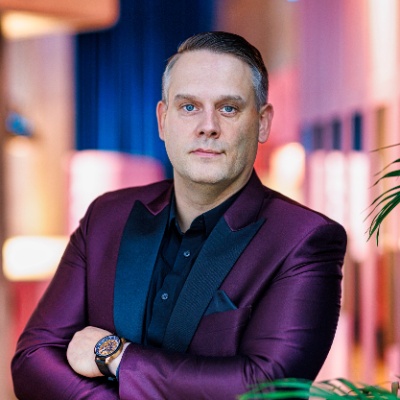
Pert Lomp
Strateegiline mentor ja süsteemide looja
Olen strateegiline mõtleja ja süsteemide looja, kes aitab inimestel ja organisatsioonidel liikuda kaosest selguse, struktuuri ja tulemuste suunas. Minu tugevus seisneb võimes näha suurt pilti ning siduda omavahel tehnoloogia, finantsid ja juhtimine tervikuks, mis päriselt töötab. Mul on üle 25 aasta kogemust erinevates rollides – alates tehnoloogia ja meedia valdkonnast kuni juhtimise, äriarenduse ja strateegilise nõustamiseni. Tegutsen täna eelkõige mentorina ja partnerina inimestele, kes on jõudnud punkti, kus järgmine samm ei vaja enam rohkem infot, vaid selgust, otsust ja suunda. Mind käivitab kasv – nii inimeste kui süsteemide tasandil. Usun, et enamik piiranguid ei tule väljastpoolt, vaid meie enda mõtteviisist, harjumustest ja uskumustest. Minu roll on aidata need mustrid nähtavaks teha, need lahti murda ning asendada need toimivate, teadlike valikutega. Minu lähenemine on kombinatsioon ratsionaalsest strateegiast ja sügavamast inimlikust mõistmisest. Töötan seal, kus kohtuvad loogika ja sisemine areng – kus otsused ei ole ainult õiged Excelis, vaid ka kooskõlas inimese tegeliku potentsiaali ja suunaga. Mentorina olen otsekohene, kohal ja tulemustele suunatud. Ma ei paku pehmendatud vastuseid, vaid selgust. Samas loon ruumi, kus inimene saab turvaliselt mõelda, näha ja kasvada. Minu jaoks on kõige suurem väärtus hetk, kus inimese sees tekib “klõps” – kui segadus asendub arusaamisega ja ebakindlus muutub teadlikuks liikumiseks edasi. Kui oled punktis, kus tead, et oled võimeline enamaks, aga vajad selgust, struktuuri ja tuge järgmise sammu tegemiseks, siis siin me kohtume.