
Every mask was once a solution: The Achiever
Worth through performance
You know them. Their inbox is empty at eleven at night and full again at six in the morning, because they answered everything before you even woke up. They can't remember the last time they sat still, with nothing on the go, because an empty moment stirs a restlessness in them they can't always explain.
When one project ends, they barely have time to celebrate it, because their mind is already on the next one. Going on holiday, they take the laptop along "just in case". They measure their day by what got done, and if nothing did, they feel uncomfortable. Almost guilty.
From the outside they look successful. Hardworking. Reliable. Strong. The one who always delivers. They get held up as the example. They are handed more and more responsibility, because they can handle it. They don't complain much. They don't get in the way. They don't seem to need anyone.
But no one asks what price they pay for it. And least of all do they ask themselves.
Achieving is not the same as depending on achievement
Achieving in itself is not the problem. The wish to build, to create, to grow, to take responsibility and to actually get something done is a beautiful and necessary thing. The world moves forward thanks to people who don't settle for comfort alone. Many good things are born through the hands of those who take responsibility, go all the way, and don't disappear when things get hard.
But there is a difference between achieving and depending on achievement. One is born of life force. The other of fear.
Somewhere earlier this person learned that they were noticed when they were good. That praise, closeness, calm or safety arrived when they brought home a good grade, won, helped, didn't disappoint, or did more than was asked.
A child grasps this quickly. They learn that love may not be something that simply is. It can be something you have to earn.
And once that logic is stored in the body, it doesn't just disappear when you become an adult. Only the audience changes. Maybe you are no longer chasing your parents' approval. You are chasing the approval of a boss, a board, the market, a client, a partner, or yourself.
But the inner formula stays the same. I am worth what I can produce.
For such a person, rest is not always rest. Sometimes it's a threat. Because in rest there is no performance. And when there is no performance, a question begins quietly to surface, the question all this activity is protecting them from.
Who am I when I'm not doing anything? Am I enough even when I'm not proving anything? Am I wanted even when I'm not useful?
Mostly those questions aren't allowed to finish surfacing. Because there is always a next thing to hide behind.
What this doesn't mean
It doesn't mean ambition is bad. It doesn't mean hard work is a problem. It doesn't mean every person who does a lot is wearing a mask. It doesn't mean performance has to be made smaller somehow.
The opposite. The achiever mask has often built a great deal of good. Companies. Teams. Projects. Careers. Homes. Solutions that without this person's effort would never have come to be.
The question isn't whether a person can do a lot. The question is whether they can also not do, and still feel they have worth. The difference is whether you act because something genuinely matters to you, or because you are afraid of who you are the moment you stop.
Success and peace are not the same thing. And often it is the most accomplished people who have never once let themselves feel that they are enough.
How the mask shows up at work
At work the achiever is the person you can rely on. They show up. They get it done. They take responsibility. When something needs saving, turning around, finishing or getting off the ground, it often lands on their desk.
And because they can handle it, their load grows unnoticed. They take on more than they can manage, because saying no would mean admitting they have a limit. But a limit often feels like weakness to them. They can't delegate, because no one else does the thing to their standard. And in truth that standard isn't only a quality requirement. It is their seatbelt. If everything is under their control, they don't have to feel helpless.
The achiever's identity grows so tightly entwined with the work that criticism of a project can feel like criticism of them as a person. A small correction in a document can go far deeper than anyone in the room guesses. Feedback doesn't only touch the result. It touches their inner fear that maybe they weren't enough after all.
In a leadership role this mask can become especially invisible, because the organisation rewards it. The achiever looks like the ideal leader. Fast, demanding, durable, always available. They do even the thing that really shouldn't be in their hands anymore. They rescue situations the system should already be carrying itself. They compensate with their own strength for the organisation's weaknesses, and get recognised for it.
Until at some point it's no longer clear whether they are leading the system or holding it up with their own nervous system. And then comes burnout. Not because they are weak. But because they never let themselves stop before the body made that decision for them.
How the mask shows up in relationships
In relationships the achiever can be hard to reach, even when they are physically present. They sit at the table, but their mind is half on the next task. They listen, but part of them is already calculating what still needs doing. They love, but they often show it through action. They build a home, solve problems, organise, pay, plan, fix and take responsibility.
All of that can be real caring. But presence is not the same as contribution. A partner or children may feel they are competing with the achiever's goals, and they often lose that contest. Not because they aren't loved. But because simple presence, without solving and doing, may be the hardest thing in the world for them.
In friendship they can be the one who shows up when there's a crisis but disappears when it would just be about being together. They help when something needs solving, but find it harder to be visible when nothing is needed from them. Because when no one needs anything from them, they don't always know what their place is.
How to reach the person behind the mask
If you want to reach the achiever, don't notice only their results. This is hard, because the results are often impressive. Praise comes naturally. "You did it again, brilliantly." "We can always count on you." "It wouldn't have worked without you." All of it may be true. But every time you notice them only when they achieved something, you confirm the old logic in them once more: I am seen when I deliver.
Notice the person even when they are doing nothing. Tell them you are glad to be with them, not only glad about what they did for you. Ask how they are really doing, and don't settle for the first automatic answer. Don't fill every silence with a new task. Don't reward them only for carrying more than others.
At work this also means very practical things. Don't automatically give the most responsible person the most work. Don't use their reliability to cover the gaps in the system. Don't quietly turn them into the rescuer. Help them delegate in a way that doesn't feel like a loss of identity, but like the next level of leadership.
And when they try to rest but turn restless, don't immediately offer them a new task. Sometimes the greatest help is when you don't help them escape again.
If this is you
Then know this first. Your ability to work, to create and to take responsibility is not the enemy. It has carried you far. It has built things you have every right to be proud of. Maybe it was your determination that held people, projects, companies or family together at a time when others couldn't. There is no shame in that.
But protection is not the same as freedom.
The mask that lets you breathe only when you've proven something will in the end take away the most valuable part of what you build: the ability to actually enjoy it.
You set a goal. You reach it. And before the joy can arrive, you are already halfway to the next one. Your worth is reset, as it were, every morning, and you have to earn it again. That is a very tiring way to live. And the saddest part is that a person often doesn't notice that tiredness until the body, the relationship or life itself stops them.
If this touches you, the question isn't how to become less capable. The question is how to become freer. How to do what matters without your whole worth hanging on the result. How to rest without guilt. How to be loved even when you aren't being useful. How to build a life you don't have to keep proving.
This can be learned. Self-compassion is not softness or laziness. It is the skill of treating yourself the way you would treat a person you genuinely care about. ACT, acceptance and commitment therapy, can help you tell apart what you do out of fear from what you do for your values. Somatic work can help the nervous system learn that stillness is not a threat. Coaching or mentoring can help you rethink responsibility, boundaries and leadership so you no longer have to carry everything with your own strength.
Evoluna was built for exactly these moments. For the moment when a person realises they have maybe run their whole life, but wants for the first time to ask what for.
You can begin with a self-assessment that doesn't measure your worth or pin a label on you, but helps you see which patterns are working more strongly in you right now. And if you want to go further, you can find a person who can truly work with the theme.
The mask was once a solution. It built you a life.
But you don't have to keep running inside it to the end.
And you don't have to come to a stop alone.
Kuidas see artikkel sind puudutab?
Kommentaarid
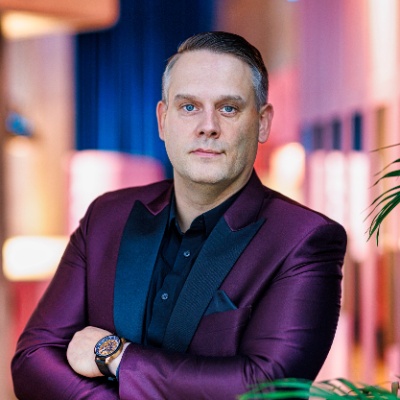
Pert Lomp
Strateegiline mentor ja süsteemide looja
Olen strateegiline mõtleja ja süsteemide looja, kes aitab inimestel ja organisatsioonidel liikuda kaosest selguse, struktuuri ja tulemuste suunas. Minu tugevus seisneb võimes näha suurt pilti ning siduda omavahel tehnoloogia, finantsid ja juhtimine tervikuks, mis päriselt töötab. Mul on üle 25 aasta kogemust erinevates rollides – alates tehnoloogia ja meedia valdkonnast kuni juhtimise, äriarenduse ja strateegilise nõustamiseni. Tegutsen täna eelkõige mentorina ja partnerina inimestele, kes on jõudnud punkti, kus järgmine samm ei vaja enam rohkem infot, vaid selgust, otsust ja suunda. Mind käivitab kasv – nii inimeste kui süsteemide tasandil. Usun, et enamik piiranguid ei tule väljastpoolt, vaid meie enda mõtteviisist, harjumustest ja uskumustest. Minu roll on aidata need mustrid nähtavaks teha, need lahti murda ning asendada need toimivate, teadlike valikutega. Minu lähenemine on kombinatsioon ratsionaalsest strateegiast ja sügavamast inimlikust mõistmisest. Töötan seal, kus kohtuvad loogika ja sisemine areng – kus otsused ei ole ainult õiged Excelis, vaid ka kooskõlas inimese tegeliku potentsiaali ja suunaga. Mentorina olen otsekohene, kohal ja tulemustele suunatud. Ma ei paku pehmendatud vastuseid, vaid selgust. Samas loon ruumi, kus inimene saab turvaliselt mõelda, näha ja kasvada. Minu jaoks on kõige suurem väärtus hetk, kus inimese sees tekib “klõps” – kui segadus asendub arusaamisega ja ebakindlus muutub teadlikuks liikumiseks edasi. Kui oled punktis, kus tead, et oled võimeline enamaks, aga vajad selgust, struktuuri ja tuge järgmise sammu tegemiseks, siis siin me kohtume.