Every mask was once a solution: What is beneath the mask?
Back to yourself
We have walked through twelve masks now. The Achiever, the Pleaser, the Rescuer, the Tough One, the Critic, the Unseen, the Controller, the Know-It-All, the Martyr, the Clown, the Star, the Charmer. Twelve ways of being in the world that began, somewhere, as a real and intelligent solution to a problem the person didn't choose.
If you have read this far, you have probably found yourself in more than one of them. That isn't a failure of self-knowledge. That is what being a human being looks like. Most of us carry several. We may have a main one, the one that does the heaviest lifting in our life, and a handful of others that come out in particular relationships, particular phases, particular pressures. The masks aren't fixed. They are dynamics. They activate, they recede, they trade places.
What matters, in the end, isn't naming the mask precisely. What matters is being able to ask the deeper, much harder question.
What is beneath the mask?
Underneath, almost always, is the same thing
If you sit with each of the twelve carefully, you start to notice something. The masks look different on the surface. The Achiever is busy. The Unseen is quiet. The Controller is organised. The Clown is funny. The Critic is sharp. The Star is bright. The Pleaser is warm. The Charmer is smooth. From a distance they have almost nothing in common.
But underneath, in the place where the mask was originally needed, there is almost always the same thing. A small version of the person, somewhere earlier in their life, who couldn't be sure that being themselves would be safe. Who couldn't be sure that being themselves would be loved. Who needed to do something, adjust something, perform something, become something, to keep their place.
The Achiever became impressive, so they wouldn't be dismissed. The Pleaser became agreeable, so they wouldn't be rejected. The Rescuer became indispensable, so they wouldn't be abandoned. The Tough One became hard, so they wouldn't be broken. The Critic became guarded, so they wouldn't be disappointed. The Unseen became small, so they wouldn't be in danger. The Controller became organised, so the world wouldn't fall apart. The Know-It-All became right, so they wouldn't be humiliated. The Martyr became sacrificing, so they wouldn't be unworthy. The Clown became funny, so they wouldn't have to feel. The Star became radiant, so they wouldn't be forgotten. The Charmer became adjustable, so they wouldn't be cast out.
Twelve different strategies, all answering the same quiet, hidden question. Will I be wanted as I actually am, without doing anything in particular?
For many people the honest answer, at some point early on, was something like: probably not, or at least not reliably, so you had better do something. And the mask formed in response.
Once you see this, you stop hating the mask. You also stop hating other people's masks. They aren't weaknesses, or failures of personality. They are small acts of survival that started a long time ago and never quite ended.
Why the mask outstays its usefulness
If the mask was once a real solution, why does it cause so much pain in adulthood? Why don't we simply outgrow it as the original danger fades?
A few reasons.
The first is that the nervous system doesn't easily update. The body learned, in childhood, that a certain way of being kept you safe. That learning is stored deep, often below conscious thought. It doesn't get rewritten just because, intellectually, you now know that the original danger has passed. The body still flinches. The body still adjusts. The body still controls, performs, hides, helps, smiles, charms, criticises, jokes, exactly when it always did.
The second is that the mask got rewarded. The world responded. Achievers got promotions. Pleasers were called wonderful people. Tough ones were respected. Charmers were liked. Stars were celebrated. The mask wasn't only protective. It was also functional, sometimes lucratively so. Many of us built lives, careers, relationships and identities on the back of the very pattern that began as a survival strategy. That makes it especially hard to put down.
The third is that, often, no one taught us the difference. The culture rarely distinguishes between strength and protection in the same shape. A high-functioning Controller looks indistinguishable from a person with good organisational skills. A high-functioning Charmer looks indistinguishable from a person with social grace. A high-functioning Achiever looks indistinguishable from a person who is ambitious in a healthy way. Without someone to help us see the difference, we may go through decades not realising that the very thing we are praised for is also the thing that is quietly costing us our peace.
The fourth, and perhaps the most tender, is fear. Even when we sense the cost, the mask feels like us. To consider laying it down can feel like considering laying ourselves down. Who would I be if I weren't always achieving? Who would I be if I stopped pleasing? Who would I be without my hardness, my humour, my brightness, my care? For many people the question is so frightening that they would rather keep the mask than discover the answer.
What this doesn't mean
It doesn't mean the masks are bad and need to be eliminated. We aren't trying to scrub ourselves clean of them. They are part of us. Several of them have built things we are rightly proud of, taken care of people we love, carried us through situations we wouldn't otherwise have survived.
It doesn't mean there is a "real self" beneath the mask, waiting in perfect form to be uncovered. The idea of a hidden, perfect inner self is a fantasy that can become its own trap. There is no glossy authentic version of you that has been sitting in storage. There is only you, including the patterns you have lived inside for years, and the slow work of meeting yourself more honestly within them.
And it doesn't mean the work is to be "unmasked" all the time. We will always wear something. In some situations, some protection is appropriate. Walking into a difficult meeting fully naked of any protection isn't liberation. It is naivety. The question isn't whether to wear any mask. The question is whether the mask is being chosen, in the moment, by an adult who can also choose otherwise. Or whether it is being worn automatically, by an old protection system that doesn't know the old danger is gone.
What growth actually looks like
Real change, the kind that lasts, rarely looks like dramatic reinvention. It usually looks much smaller.
It looks like an Achiever taking a slow weekend and not feeling, by Sunday evening, like they wasted it.
It looks like a Pleaser saying no to a request, and noticing that the friendship survives.
It looks like a Rescuer letting someone they love struggle through their own problem, and not collapsing into rescue mode.
It looks like a Tough One letting their partner see them cry, and not feeling diminished by it.
It looks like a Critic catching themselves about to dismantle a hopeful idea, pausing, and asking instead what would have to be true for it to work.
It looks like an Unseen saying, in a meeting, what they actually think, without rehearsing it for an hour first.
It looks like a Controller letting someone else handle the trip, the decision, the household, and tolerating the strange, uncomfortable feeling of not being in charge.
It looks like a Know-It-All sitting in a conversation and saying, easily, "I actually don't know", and discovering that the room hasn't disappeared.
It looks like a Martyr telling someone, directly, what they want, before the resentment has to do the asking for them.
It looks like a Clown sitting with their own sadness for ten minutes without converting it into a joke.
It looks like a Star going through a stretch of life where almost no one is watching, and feeling, slowly, that they still exist.
It looks like a Charmer disagreeing with someone they love, and not adjusting themselves into the disagreement to make it easier.
Twelve small acts of growth, each one a small act of trust that being yourself, in this particular moment, is allowed.
How to begin, if you want to
If something in this series has touched you, the first thing isn't to pick the right mask and try to "fix" it. The masks aren't problems to be solved. They are protections to be understood, and slowly, slowly, allowed to relax their grip.
What helps, more than any single technique, is being met. Met by another person who can see the mask and also see the person inside it. Who isn't fooled by the performance, and isn't trying to dismantle it. Who can hold a steady presence while you, very slowly, discover what is underneath. This is often what therapy is. It is what good mentoring is. It is what some friendships are. It is what some moments of love are.
Work with inner parts, often called IFS, can help you meet the protector inside you with curiosity instead of judgment. Somatic work can help your nervous system update its sense of what is currently safe. Acceptance and commitment work, called ACT, can help you live alongside the parts of yourself that don't simply disappear when you understand them. Self-compassion practice can help with the part of all this work that is hardest, which is being kind to yourself while you find out how much you have been carrying.
This is exactly what Evoluna was built for. You can begin with a self-assessment that doesn't grade you, doesn't categorise you, and doesn't push you anywhere you aren't ready to go. It reflects back, quietly, what is moving in you. And if you want to go further, you can find a specialist, mentor or coach who knows how to work with the particular masks that have shaped your life, in the particular ways they have shaped it.
You don't have to know yet which mask is the main one. You don't have to have already done the work. You don't have to be ready to change. You can simply start with the question.
What has been protecting me?
What did it protect me from?
And what might it be quietly costing me now?
A closing word
Every mask was once a solution. It made the world survivable for a small person who didn't have many other options. It deserves, before anything else, a kind of respect. Not gratitude exactly, and not loyalty, but respect. Something in you was clever enough, at a difficult moment, to build a way to stay.
But protection is not the same as freedom.
The mask kept you alive, in a sense, through the years when survival was the question. The freedom you are perhaps ready for now is a different question, and it asks more of you. It asks you to slowly find out who you are when you aren't doing the thing the mask makes you do. To slowly discover whether love is still available when you aren't earning it. To slowly experience that being yourself, the unedited version, can be enough.
This isn't quick work. It isn't a workshop. It isn't a weekend. It is something more like a long, quiet relationship with the part of you that has been carrying everything for so long. You meet it. You listen to it. You thank it. You let it slowly understand that the danger has passed. And, over time, it agrees to step back, just enough that the rest of you can come forward.
You don't have to do this alone.
That, in the end, was the whole reason for this series. Not to convince you of anything. Not to label anyone. Not to give you a diagnosis. Only to say, in twelve different ways, what is sometimes the hardest sentence to fully believe.
You were never the mask.
You were always the person underneath, who once needed it.
And the person underneath is still here, and is, finally, allowed to be wanted as themselves.
Kuidas see artikkel sind puudutab?
Kommentaarid
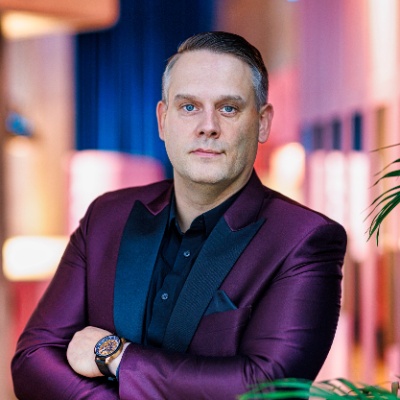
Pert Lomp
Strateegiline mentor ja süsteemide looja
Olen strateegiline mõtleja ja süsteemide looja, kes aitab inimestel ja organisatsioonidel liikuda kaosest selguse, struktuuri ja tulemuste suunas. Minu tugevus seisneb võimes näha suurt pilti ning siduda omavahel tehnoloogia, finantsid ja juhtimine tervikuks, mis päriselt töötab. Mul on üle 25 aasta kogemust erinevates rollides – alates tehnoloogia ja meedia valdkonnast kuni juhtimise, äriarenduse ja strateegilise nõustamiseni. Tegutsen täna eelkõige mentorina ja partnerina inimestele, kes on jõudnud punkti, kus järgmine samm ei vaja enam rohkem infot, vaid selgust, otsust ja suunda. Mind käivitab kasv – nii inimeste kui süsteemide tasandil. Usun, et enamik piiranguid ei tule väljastpoolt, vaid meie enda mõtteviisist, harjumustest ja uskumustest. Minu roll on aidata need mustrid nähtavaks teha, need lahti murda ning asendada need toimivate, teadlike valikutega. Minu lähenemine on kombinatsioon ratsionaalsest strateegiast ja sügavamast inimlikust mõistmisest. Töötan seal, kus kohtuvad loogika ja sisemine areng – kus otsused ei ole ainult õiged Excelis, vaid ka kooskõlas inimese tegeliku potentsiaali ja suunaga. Mentorina olen otsekohene, kohal ja tulemustele suunatud. Ma ei paku pehmendatud vastuseid, vaid selgust. Samas loon ruumi, kus inimene saab turvaliselt mõelda, näha ja kasvada. Minu jaoks on kõige suurem väärtus hetk, kus inimese sees tekib “klõps” – kui segadus asendub arusaamisega ja ebakindlus muutub teadlikuks liikumiseks edasi. Kui oled punktis, kus tead, et oled võimeline enamaks, aga vajad selgust, struktuuri ja tuge järgmise sammu tegemiseks, siis siin me kohtume.