
No one is born a blank page
Free will or invisible programming? Series, part 2.
We like to imagine a baby as a clean sheet. Pure, open, ready for life to write whatever it will. It is a beautiful picture. It is also not quite true.
You did not arrive empty. You arrived into a particular family, in a particular mood, at a particular moment in their lives. Into their hopes and their tiredness, their unspoken rules, the things they were proud of and the things they could not face. And before you could speak a word, you were already learning how to survive in that exact world.
In the first article we asked whether we even have free will. Here we look at where the lack of it begins. Because long before you could choose anything, you were already being shaped.
A small child has one quiet job above all others. Stay connected to the people who keep you alive. A child cannot leave, cannot earn its own bread, cannot survive alone. So it does something remarkable and almost invisible. It studies the people around it, and it becomes whatever keeps the connection safe.
If calm was rewarded, you learned to be calm. If your sadness made things worse, you learned to hide it. If you were only noticed when you achieved, you learned to achieve. If love came with conditions, you learned the conditions by heart. None of this was a decision. It was survival, and survival runs deeper than thought.
This is where your first roles were born. The strong one. The easy one. The clever one. The one who keeps the peace. The one who never needs anything. You did not pick these roles from a menu. You grew into them because, back then, they worked.
The trouble is that the role does not end when childhood does.
You grow up. The danger passes. The family changes or fades. And yet the role keeps running. The person who learned to keep the peace as a child still swallows their own needs in a meeting at forty. The one who learned that achievement equals love still cannot rest without earning it first. The one who learned to expect nothing still finds it strange when someone offers care.
What kept you safe as a child can quietly run your adult life. And because it has been with you so long, it does not feel like a role at all. It feels like your personality. It feels like simply who you are.
Here is the heart of this article.
Before you learned to choose, you learned to survive. And the way you survived became the first draft of who you are.
That draft is not your fault. A child does the only sensible thing, which is to adapt to the world it is given. But a draft written for one world does not always fit the next. The role that protected the child can limit the adult. And you cannot rewrite what you cannot first see.
What this doesn't mean
This does not mean your parents are villains. Most were carrying their own unfinished drafts, handed down from their own childhoods. They gave what they had. Seeing the role you took on is not an accusation against them. It is simply you, finally looking at the shape you were pressed into, so you can decide what to keep.
It also does not mean you are broken. The role worked. It got you here. There is something to honour in that, even as you outgrow it. You are not fixing a defect. You are updating a strategy that was wise once and may be costing you now.
And it does not mean you can simply drop the role tomorrow. It has been running for decades. It will not vanish because you noticed it. But a role you can see is no longer the same role. It loosens its grip the moment it stops being invisible.
A small exercise
Think of one situation where you become someone slightly smaller, more careful, more automatic than you would like. A family dinner, a certain colleague, a particular kind of conflict.
And ask gently, without blaming yourself: what was I as a child, that I am still being here?
Maybe you go quiet to keep the peace. Maybe you over-explain to avoid being misunderstood. Maybe you take care of everyone so no one notices you have needs too. These are not flaws. They are old survival skills, still on duty long after the danger has gone.
You do not have to change the role today. Just see it for what it is. A clever child's solution to a world that no longer exists. That recognition alone begins to give you a choice you did not have before.
Be kind to yourself here. Do not dig into the hardest memory. Pick a small, familiar pattern and look at it calmly.
This was the second article in the series. We saw that no one starts on a blank page, that childhood writes the first draft of who we are, and that the roles we took on to survive can quietly run the rest of our lives.
You do not have to undo anything today. Just notice one role you took on long ago, still running now. That noticing is already a great deal. Because a draft you can read is a draft you can begin to revise.
The hardest patterns to see are the ones you were born inside. They feel so natural that you do not notice them at all. This is exactly where another person can help, someone outside the role who can see it more clearly than you can from within, and who can name it gently, not to judge you, but to help you finally choose.
This is part of what we are building at Evoluna. A place where you do not have to go on alone.
In the next part: language as the invisible architect. How the words you grew up with quietly shaped what you are able to think, and even what you are able to want.
Pert Lomp is the founder of Evoluna and an EMCC-certified mentor.
Kuidas see artikkel sind puudutab?
Kommentaarid
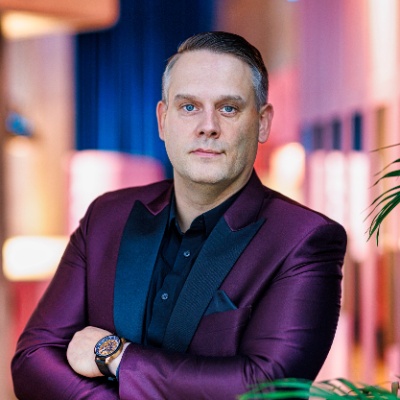
Pert Lomp
Strateegiline mentor ja süsteemide looja
Olen strateegiline mõtleja ja süsteemide looja, kes aitab inimestel ja organisatsioonidel liikuda kaosest selguse, struktuuri ja tulemuste suunas. Minu tugevus seisneb võimes näha suurt pilti ning siduda omavahel tehnoloogia, finantsid ja juhtimine tervikuks, mis päriselt töötab. Mul on üle 25 aasta kogemust erinevates rollides – alates tehnoloogia ja meedia valdkonnast kuni juhtimise, äriarenduse ja strateegilise nõustamiseni. Tegutsen täna eelkõige mentorina ja partnerina inimestele, kes on jõudnud punkti, kus järgmine samm ei vaja enam rohkem infot, vaid selgust, otsust ja suunda. Mind käivitab kasv – nii inimeste kui süsteemide tasandil. Usun, et enamik piiranguid ei tule väljastpoolt, vaid meie enda mõtteviisist, harjumustest ja uskumustest. Minu roll on aidata need mustrid nähtavaks teha, need lahti murda ning asendada need toimivate, teadlike valikutega. Minu lähenemine on kombinatsioon ratsionaalsest strateegiast ja sügavamast inimlikust mõistmisest. Töötan seal, kus kohtuvad loogika ja sisemine areng – kus otsused ei ole ainult õiged Excelis, vaid ka kooskõlas inimese tegeliku potentsiaali ja suunaga. Mentorina olen otsekohene, kohal ja tulemustele suunatud. Ma ei paku pehmendatud vastuseid, vaid selgust. Samas loon ruumi, kus inimene saab turvaliselt mõelda, näha ja kasvada. Minu jaoks on kõige suurem väärtus hetk, kus inimese sees tekib “klõps” – kui segadus asendub arusaamisega ja ebakindlus muutub teadlikuks liikumiseks edasi. Kui oled punktis, kus tead, et oled võimeline enamaks, aga vajad selgust, struktuuri ja tuge järgmise sammu tegemiseks, siis siin me kohtume.