
Language, the invisible architect
Free will or invisible programming? Series, part 3.
Right now, you are thinking in words. As you read this, a quiet voice in your head is sounding them out, and that voice has an accent, a vocabulary, a grammar. It is almost certainly the language you grew up in.
We treat language as a simple tool. A neutral set of labels we attach to a world that exists out there, ready-made. You see a thing, you reach for its name, you hand it over. Easy.
But language is not only how you describe your thoughts. It is part of how you have them. The words you were given do not just report your inner world. They help build it. And like any architect, language decides where the walls go, which rooms are easy to enter, and which doors were never drawn at all.
This does not mean your language traps you completely, or that people who speak differently live in separate universes. That older, stronger claim does not hold up. What does hold up is gentler and more interesting. The language you think in makes some thoughts easy and others effortful. It lays down well-paved roads to certain ideas, and leaves others as paths you have to cut by hand.
Think of how a word you did not have can change you. Before you had a name for a feeling, it was just a fog. Then someone gives you the word, and suddenly the fog has edges. You can hold it, talk about it, work with it. The feeling did not change. Your ability to think about it did. That is language building a room you could not enter before.
Every language draws its own map, and the map is full of quiet choices.
Take Estonian, since it is my own. It has no grammatical gender. He and she are the same word. A child grows up without that constant, automatic sorting of the world into masculine and feminine that other languages perform in every sentence. That is not nothing. It is a slightly different shape of attention, repeated millions of times.
Estonian also has no separate future tense. You speak of what is coming in the present. There is something quietly worth sitting with there, in a language that does not grammatically wall off tomorrow from today, though how much it shapes a mind is an open question, not a fact to oversell. And the language carries fourteen cases, a richness of small endings that lets you say in one word what another language needs a whole phrase for. Speakers of a small language also carry something else, a particular awareness of identity, of being few, of a tongue that must be tended or it fades.
None of this makes one language better. It simply shows that each language hands its speakers a different set of well-worn roads.
It goes further if you live in more than one language.
When you speak another tongue, you do not just swap words. You shift, a little, into a different version of yourself. The rhythm changes. The jokes change. The things that feel sayable change. People who live across languages often describe it plainly: I am slightly different in each one.
I know this from the inside. There is a self that thinks in Estonian, close to home, to roots, to the oldest feelings. There is a self that works in English, faster, more global, built for ideas and reach. And there is a self that lives in Italian, warmer, more bodily, tied to a slower way of being. They are not masks. They are more like different inner workbenches, each one good for building different things.
This is not a loss of a true self. It is a quiet expansion of what a self can be. Each language opens a slightly different room in you, and you get to walk through more of the house.
Here is the heart of this article.
The words you were given shaped not only how you speak, but what you can easily think and even what you can easily want. Language is an architect that worked on you before you could read the plans.
And like the roles from the last article, this shaping is invisible precisely because it is everywhere. You do not notice the language you swim in any more than a fish notices water. It just feels like reality. But the moment you see that your thoughts run along roads someone else paved, you can begin to ask whether you want to keep walking only those roads.
What this doesn't mean
This does not mean you are imprisoned by your mother tongue. You are not. Roads can be widened, new ones can be cut. Learning a word, a concept, another language, all of it adds rooms to the house. The point is not that you are stuck. The point is that you have more freedom once you can see the walls.
It also does not mean some languages are richer or better than others. Every language is a complete world, with its own gifts and its own blind spots. The aim is not to rank them. It is to notice that yours, like all of them, quietly shapes you.
And it does not mean that if you only think in one language you are somehow lesser. Many people live deep, full lives in a single tongue. The invitation is simply to notice that even one language is not a neutral window. It is a particular pair of glasses, and you have been wearing it since before you can remember.
A small exercise
Think of a feeling or experience you have struggled to name. Something that sits in you as a fog, with no clean word for it.
Do not force a label. Just notice what it is like to live with something you cannot quite say. And then, if a word does come, in any language you know, notice what happens. Does the fog get edges? Does something settle?
You can also try this. Think of a word from another language that has no good translation into your own. A word for a feeling, a kind of light, a way of being together. Hold it for a moment, and notice that it points at something real, something your own language may never have given you a road to.
This is not about becoming a linguist. It is about feeling, directly, how much of your inner world is shaped by the words you happen to have. Be gentle, and stay with something light.
This was the third article in the series. We saw that language is not a neutral tool but a quiet architect, that each tongue lays down its own roads, and that living across languages can open more rooms in the self than we knew were there.
You do not have to change how you think today. Just notice, once, that your thoughts run in words, and that someone else laid those first roads. That noticing is enough to begin.
The roads you think on are hard to see, because you have walked them your whole life. This is where another person can help, someone who hears the words you use about yourself and gently points to the ones that quietly fence you in, the I am just like that, the I could never, the it has always been this way.
This is part of what we are building at Evoluna. A place where you do not have to go on alone.
In the next part: which you is the real you? How different situations call out different versions of you, and what it means to choose between them.
Pert Lomp is the founder of Evoluna and an EMCC-certified mentor.
Kuidas see artikkel sind puudutab?
Kommentaarid
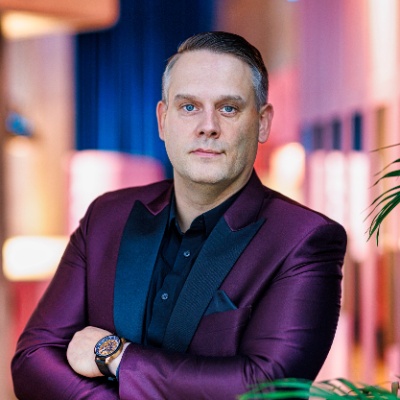
Pert Lomp
Strateegiline mentor ja süsteemide looja
Olen strateegiline mõtleja ja süsteemide looja, kes aitab inimestel ja organisatsioonidel liikuda kaosest selguse, struktuuri ja tulemuste suunas. Minu tugevus seisneb võimes näha suurt pilti ning siduda omavahel tehnoloogia, finantsid ja juhtimine tervikuks, mis päriselt töötab. Mul on üle 25 aasta kogemust erinevates rollides – alates tehnoloogia ja meedia valdkonnast kuni juhtimise, äriarenduse ja strateegilise nõustamiseni. Tegutsen täna eelkõige mentorina ja partnerina inimestele, kes on jõudnud punkti, kus järgmine samm ei vaja enam rohkem infot, vaid selgust, otsust ja suunda. Mind käivitab kasv – nii inimeste kui süsteemide tasandil. Usun, et enamik piiranguid ei tule väljastpoolt, vaid meie enda mõtteviisist, harjumustest ja uskumustest. Minu roll on aidata need mustrid nähtavaks teha, need lahti murda ning asendada need toimivate, teadlike valikutega. Minu lähenemine on kombinatsioon ratsionaalsest strateegiast ja sügavamast inimlikust mõistmisest. Töötan seal, kus kohtuvad loogika ja sisemine areng – kus otsused ei ole ainult õiged Excelis, vaid ka kooskõlas inimese tegeliku potentsiaali ja suunaga. Mentorina olen otsekohene, kohal ja tulemustele suunatud. Ma ei paku pehmendatud vastuseid, vaid selgust. Samas loon ruumi, kus inimene saab turvaliselt mõelda, näha ja kasvada. Minu jaoks on kõige suurem väärtus hetk, kus inimese sees tekib “klõps” – kui segadus asendub arusaamisega ja ebakindlus muutub teadlikuks liikumiseks edasi. Kui oled punktis, kus tead, et oled võimeline enamaks, aga vajad selgust, struktuuri ja tuge järgmise sammu tegemiseks, siis siin me kohtume.