Do we even have free will?
Free will or invisible programming? Series, part 1.
You make a choice. You pick the coffee, the job, the partner, the words you say in an argument. And it feels obvious that you are the one choosing. There is a you, somewhere behind your eyes, weighing the options and deciding.
But sit with that feeling for a moment. Where did the choice actually come from? Why this option and not the other one? Why this taste, this fear, this reaction that arrives before you have even had time to think?
This is the question the whole series begins with. Not as a philosophy puzzle, but as something practical. How much of what you call your choice is really yours, and how much of it was set in motion long before you arrived at the moment of choosing?
For a long time people argued about free will as if there were only two answers. Either you are completely free, the captain of every decision. Or you are not free at all, just a machine running its program, and the feeling of choosing is a comforting illusion.
Both answers are too simple. And both miss something that matters far more in real life.
Because here is what experience actually shows. You are not born free. You are born into a body, a family, a language and a time you did not choose. You inherit reactions, fears and habits before you have any say in them. In that sense, much of you was written before you could hold the pen.
There is a set of experiments people often bring up here. Researchers found that the brain seems to begin preparing an action a fraction of a second before the person feels they have consciously decided. For some, this was proof that free will is a fiction. The brain decides, and you only think you did.
It is worth being careful with this. The experiments are real, and they are interesting. What they actually mean is still argued over by serious people. Lifting a finger in a lab is not the same as choosing a career or forgiving someone. So it is too fast to say these studies kill free will. What they do show is gentler and still important. The clean picture, where a calm conscious you sits on top and decides everything, does not match how a person really works.
So here is a different way to hold it.
Free will is not a thing you either have or do not have. It is not a gift handed to you at birth, fully formed. It is closer to a capacity. Something that can be small or large. Something that can grow.
A newborn has almost none of it. It reacts, it cries, it is moved entirely by what happens to it. A young child has a little more. And an adult who has learned to notice their own patterns, to pause before reacting, to question the story they tell themselves, has more still. Not infinite freedom. But real, usable freedom, built over time.
This is the quiet thesis the whole series rests on. You are programmed before you are free. And the moment you begin to see the program, freedom becomes possible.
This view has a name in philosophy, though you do not need the name to use it. Some thinkers call it compatibilism. The idea is that being shaped by your past and having real freedom are not enemies. You can be deeply influenced by everything that made you, and still have a genuine, growing say in what you do next. The two live together.
That matters, because the alternatives both leave you stuck. If you are totally free, then every struggle is simply your fault, and that is cruel. If you are not free at all, then change is pointless, and that is hopeless. The truer picture is kinder and more useful. You did not choose your starting point. You can learn to choose more from here.
What this doesn't mean
This does not mean you can think your way out of everything by sheer will. Willpower alone is weak against patterns that were laid down over decades. If freedom were just about trying harder, no one would stay stuck, and clearly people do. So this is not a call to grit your teeth.
It also does not mean you are to blame for the programming you inherited. You did not write the early code. A child cannot choose its family, its language, its first wounds. Seeing the program is not the same as being guilty of it. It is simply where the work of freedom begins.
And it does not mean freedom arrives all at once. There is no single moment where you wake up free. There is only the slow practice of seeing a little more, pausing a little longer, choosing a little better. That is not a disappointment. That is how it actually works.
A small exercise
For one day, try noticing the gap. Not changing anything, just noticing.
Something happens, someone says something, a feeling rises. And you react. The exercise is simply to catch, even once, the tiny space between the thing that happened and the thing you did. It might be almost nothing. A fraction of a second. But if you can feel it, even once, you have touched the place where freedom lives.
You do not have to do anything with it yet. You do not have to react differently. Just notice that the space is there. That alone is the first real step, and it is more than most people ever take.
Be gentle about it. Do not go to the most painful reaction first. Pick a small, ordinary one, and watch it quietly.
This was the first article in the series. We started with the oldest question, whether we have free will at all, and landed somewhere more useful than yes or no. Free will is not something you are simply given. It is a capacity you build, and the building begins with seeing.
You do not need to solve anything today. Just notice, once, that there is a space between what happens and what you do. That noticing is where everything else in this series grows from.
Seeing your own patterns is hard, partly because you are inside them. They feel less like programming and more like simply who you are. This is where another person can help, someone who can see from the outside what is difficult to see from within, and who walks beside you rather than handing down answers from above.
This is part of what we are building at Evoluna. A place where you do not have to go on alone.
In the next part: no one is born a blank page. How childhood and the roles we learned to survive in shape us long before we can choose.
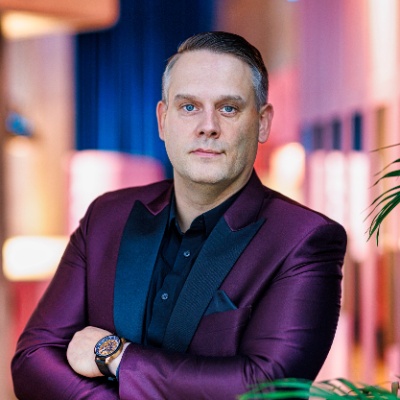
Pert Lomp is the founder of Evoluna and an EMCC-certified mentor.
Kuidas see artikkel sind puudutab?
Kommentaarid
Pert Lomp
Strateegiline mentor ja süsteemide looja
Olen strateegiline mõtleja ja süsteemide looja, kes aitab inimestel ja organisatsioonidel liikuda kaosest selguse, struktuuri ja tulemuste suunas. Minu tugevus seisneb võimes näha suurt pilti ning siduda omavahel tehnoloogia, finantsid ja juhtimine tervikuks, mis päriselt töötab. Mul on üle 25 aasta kogemust erinevates rollides – alates tehnoloogia ja meedia valdkonnast kuni juhtimise, äriarenduse ja strateegilise nõustamiseni. Tegutsen täna eelkõige mentorina ja partnerina inimestele, kes on jõudnud punkti, kus järgmine samm ei vaja enam rohkem infot, vaid selgust, otsust ja suunda. Mind käivitab kasv – nii inimeste kui süsteemide tasandil. Usun, et enamik piiranguid ei tule väljastpoolt, vaid meie enda mõtteviisist, harjumustest ja uskumustest. Minu roll on aidata need mustrid nähtavaks teha, need lahti murda ning asendada need toimivate, teadlike valikutega. Minu lähenemine on kombinatsioon ratsionaalsest strateegiast ja sügavamast inimlikust mõistmisest. Töötan seal, kus kohtuvad loogika ja sisemine areng – kus otsused ei ole ainult õiged Excelis, vaid ka kooskõlas inimese tegeliku potentsiaali ja suunaga. Mentorina olen otsekohene, kohal ja tulemustele suunatud. Ma ei paku pehmendatud vastuseid, vaid selgust. Samas loon ruumi, kus inimene saab turvaliselt mõelda, näha ja kasvada. Minu jaoks on kõige suurem väärtus hetk, kus inimese sees tekib “klõps” – kui segadus asendub arusaamisega ja ebakindlus muutub teadlikuks liikumiseks edasi. Kui oled punktis, kus tead, et oled võimeline enamaks, aga vajad selgust, struktuuri ja tuge järgmise sammu tegemiseks, siis siin me kohtume.