
Culture is the founder's mask, scaled
How people's protective roles become company culture
A company's culture isn't built only from the values written on the website. Very often it grows out of how the founder or leader protects themselves under pressure, decides, reacts and shows up in the room.
Over more than twenty years of building and leading teams, I have watched one pattern repeat itself again and again. A company doesn't only copy the founder's words. It copies the founder's defences.
If the founder protects themselves through control, the company learns to wait for approval. If the founder protects themselves through performance, the company learns to value people mainly by results. If the founder protects themselves through likeability, the company learns to avoid conflict. If the founder protects themselves through staying small, the company learns not to talk about hard things out loud.
This way, one person's private defence pattern can over time become the whole organisation's unspoken norm. And the hardest part is that no one chooses it consciously. It simply grows onto the place.
The mask was once what got the company moving at all
Here it matters not to fall into easy blame. The founder's mask isn't automatically a mistake. Often it is exactly what held the company up at the start.
The Controller kept things together in chaos at a time when there were no systems yet. The Achiever did themselves what no one else managed. The Pleaser held relationships and clients at a time when reputation was the whole asset. The Star brought visibility, energy and the story that made the first people show up at all. The Charmer opened doors that cold strategy never would have. The Tough One held the line in crisis when others would have collapsed.
Every such defence can be an advantage in the early phase.
The problem doesn't arise when the mask works. It arises when the company grows bigger than the mask, but the mask keeps leading just as strongly as it did at the start.
The same control that saved you starting from zero becomes a bottleneck in the growth phase. The same drive that built the first million can turn into a quiet culture of burnout. The same likeability that held early clients and relationships can later become a culture where no one tells the leader the full truth. The same charisma that drew people in can later block other leaders from rising.
The strength that brought you here isn't automatically the one that takes you further.
What this doesn't mean
It doesn't mean the founder is a problem to be fixed. No strong company is born without someone's strong energy, persistence, control, belief or inner defence. At the start, a company is often very much an extension of one person's nervous system, willpower and worldview.
It doesn't mean culture-building is just a values workshop either. You can write "we speak honestly" on the wall, but if the founder goes into defence at every piece of criticism, the company quickly learns that honesty is dangerous. You can write "we trust people", but if every decision has to pass through one person in the end, the company learns that trust is decoration, not the actual way of working.
Culture doesn't follow only what is on the wall. Culture follows what is actually rewarded around the leader, what is avoided, and what people get quietly punished for.
And it doesn't mean the leader has to stop being who they are. Your drive, control, charm, courage, sensitivity or critical thinking don't need to be thrown away. These can be real gifts.
The question isn't how to give them up.
The question is whether you use them consciously, or whether they run the whole company through you automatically.
What a leader could ask themselves
If this theme touches you, the most useful thing isn't to start labelling yourself or others. It is more useful to look at the company as a system and ask a few honest questions.
What defences does our system reward? Who gets noticed, who gets responsibility, and what do people actually get promoted for? If the most recognition goes to the person who always works beyond their limits, you are building an achiever culture even if the official value talks about balance.
Who here can be honest under pressure? When tension rises, do people tell the leader more truth or less? If less, you are no longer leading reality. You are leading a picture of reality.
Which strength was useful in the previous phase but is now becoming a brake? This is the hardest question, because it usually touches exactly the quality the leader is most proud of. The speed that once saved you can start leaving people behind. The control that once held quality can start blocking growth. The charisma that once brought belief can start overshadowing the system.
These aren't accusing questions.
They are a mirror.
Why this is hard to see alone
Your own defence pattern is hard to see precisely because it doesn't feel like a defence pattern. It feels like character. "This is just how I am." What makes it even harder is that the people around the leader have learned to adapt to that pattern.
If the leader controls, people start waiting for approval. If the leader can't take criticism, people start choosing their words. If the leader does too much themselves, the company quietly assumes that this is how work is supposed to be. If the leader avoids conflict, the organisation starts discussing things in the corridor rather than at the table.
Over time, the organisation stops reflecting the truth back to the leader. It reflects back what is safe to deal with.
That is why seeing your leadership pattern often needs someone from outside. Not so that someone tells you what is wrong with you, but so that someone helps you tell apart your real strength from an old defence that has simply grown too large.
A good mentor or coach doesn't fear the leader's position, but doesn't let the leader's mask run the whole conversation either. They help you see where control is clarity and where it is fear. Where performance is ambition and where it is proving your worth. Where charm builds relationships and where it avoids uncomfortable honesty. Where critical thinking protects the company and where it kills movement before it can begin.
A leader is also a human being
This is exactly the moment I built Evoluna for.
A leader is also a human being. It is just that their mask doesn't stay only inside them. It scales, because around them there is a system that learns to read their reactions, adapt to them and finally treat them as normal.
If you recognise something of your own leadership here, the first step isn't to blame yourself. The first step is to look honestly at which defence has helped you so far, and in which phase it has started to limit your company.
In Evoluna you can find a mentor, coach or specialist to examine your leadership role, your decision-making patterns and the blind spots that are hard to see alone. Not for the sake of general motivation, but to understand your specific phase, your specific bottleneck and the specific defence that may be standing in front of your next growth.
Because a company's next ceiling isn't always in the market, the strategy or the money.
Sometimes it is in the leader's old defence that no one has yet named out loud.
And the leader doesn't have to name it alone.
Kuidas see artikkel sind puudutab?
Kommentaarid
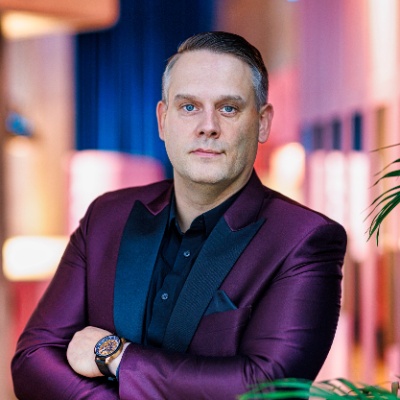
Pert Lomp
Strateegiline mentor ja süsteemide looja
Olen strateegiline mõtleja ja süsteemide looja, kes aitab inimestel ja organisatsioonidel liikuda kaosest selguse, struktuuri ja tulemuste suunas. Minu tugevus seisneb võimes näha suurt pilti ning siduda omavahel tehnoloogia, finantsid ja juhtimine tervikuks, mis päriselt töötab. Mul on üle 25 aasta kogemust erinevates rollides – alates tehnoloogia ja meedia valdkonnast kuni juhtimise, äriarenduse ja strateegilise nõustamiseni. Tegutsen täna eelkõige mentorina ja partnerina inimestele, kes on jõudnud punkti, kus järgmine samm ei vaja enam rohkem infot, vaid selgust, otsust ja suunda. Mind käivitab kasv – nii inimeste kui süsteemide tasandil. Usun, et enamik piiranguid ei tule väljastpoolt, vaid meie enda mõtteviisist, harjumustest ja uskumustest. Minu roll on aidata need mustrid nähtavaks teha, need lahti murda ning asendada need toimivate, teadlike valikutega. Minu lähenemine on kombinatsioon ratsionaalsest strateegiast ja sügavamast inimlikust mõistmisest. Töötan seal, kus kohtuvad loogika ja sisemine areng – kus otsused ei ole ainult õiged Excelis, vaid ka kooskõlas inimese tegeliku potentsiaali ja suunaga. Mentorina olen otsekohene, kohal ja tulemustele suunatud. Ma ei paku pehmendatud vastuseid, vaid selgust. Samas loon ruumi, kus inimene saab turvaliselt mõelda, näha ja kasvada. Minu jaoks on kõige suurem väärtus hetk, kus inimese sees tekib “klõps” – kui segadus asendub arusaamisega ja ebakindlus muutub teadlikuks liikumiseks edasi. Kui oled punktis, kus tead, et oled võimeline enamaks, aga vajad selgust, struktuuri ja tuge järgmise sammu tegemiseks, siis siin me kohtume.