
Red flags to watch for.
Red flags worth noticing when choosing a specialist
The Estonian coaching, mentoring, and personal development market has grown rapidly in recent years. That's a good sign — people are more intentionally seeking support. But with that growth has come confusion: how do you figure out who is actually worth seeing?
Let me start with what I often tell my friends when they ask me to recommend a coach, mentor, or some other development professional.
Coaching and mentoring in Estonia are actually far more professional fields than a surface-level glance might suggest. On the coaching side, there are longer-form training programs, international standards, ICF Estonia, ESCÜ, and several quality-conscious communities. In the field of leadership coaching, EBS programs have also played a significant role in Estonia. On the mentoring side, Fontes has been investing in mentor training since 2007 and has brought the international EMCC framework into the field.
There are quite a few genuinely credible coaches, mentors, and therapists in Estonia.
The problem isn't those people. The problem is that the same title is used by practitioners with vastly different levels of preparation, experience, and ethical grounding.
Some have years of training, supervised practice, and an active professional community behind them. Others have completed a short course, received a certificate, and call themselves a coach or mentor all the same.
Having a certificate doesn't automatically mean quality. Not having one doesn't automatically mean the person can't help. But together with other signals, it contributes to a clearer picture for making a more informed choice.
Here are some red flags worth noticing when choosing a specialist.
Red flag 1: Promises a credible specialist typically doesn't make
"A completely new life in six weeks." "Guaranteed transformation." "My clients double their income."
When a specialist promises a specific, measurable outcome in someone's inner development, it's worth proceeding with caution.
A good coach, therapist, or mentor can be accountable for their professional presence, method, process, ethics, and the quality of their work. But they cannot be accountable for the inner work you do. Change always depends on the person themselves as well — their readiness, timing, honesty, consistency, and how deep they genuinely want to go.
This doesn't mean a good specialist can't be confident. They absolutely can. But their confidence doesn't sound like: "Come to me and your life will change."
It sounds more like: "I know what I do, and I also know where the limits of my work are."
Red flag 2: Too much about them, too little about you
Look at how a specialist talks about themselves on their website or profile.
If the entire narrative revolves around their own extraordinary transformation, but very little is said about how they actually work with people — their method, training, boundaries, and who they're the right fit for — it's worth pausing.
Personal experience can be valuable. Many good specialists have found their way to this work through their own personal journey. That can bring empathy, maturity, and depth. But a personal story cannot be the only qualification.
A good specialist shares enough about themselves to build trust, then moves toward you: your situation, your needs, your pace, your responsibility.
Red flag 3: A certificate whose meaning remains unclear
Certificates and credentials come in many different forms. Some require extensive study, supervised practice, examinations, and adherence to ethical standards. Others are issued after a very short training course.
That's why it's not enough to simply check whether someone has a certificate. It's worth looking at where it comes from and what it actually means.
Ask or verify:
who provided the training
how long the program was
whether it included supervised practice
whether the certificate is tied to an international or professional quality framework
whether the person belongs to a professional community
whether they operate within a clear ethical framework
For coaching and mentoring, it's worth looking for frameworks and communities such as ICF, EMCC, and AC. For therapy, what matters is the person's clinical or therapeutic training and their affiliation with the relevant professional body.
This doesn't mean every good specialist must come from one particular school. But it does mean their preparation should be transparent. If you can't tell where someone's competence comes from, that itself is already a meaningful signal.
Red flag 4: Every domain at once
When someone describes themselves simultaneously as a life coach, business coach, relationship coach, spiritual mentor, therapist, healer, sales consultant, and strategic advisor, it's worth asking: where is their actual depth?
A broad background isn't a problem in itself. There are people who genuinely do have a multifaceted range of experience. But a very wide offering creates the risk that someone says yes to everyone, regardless of whether they are actually the right person for that specific question.
A good specialist knows their limits. They know which topics they work with and which they don't. They're able to say: "That's outside my scope." Or: "For this, I'd recommend you speak with someone else."
That "no" is often one of the strongest trust signals there is. Someone who knows their limits is usually safer than someone who promises to help with everything.
Red flag 5: You don't feel safe in the first meeting
This is the most important signal of all.
You can check training, experience, certificates, references, and profiles. Everything might look fine on paper. But if in that first conversation you feel unheard, judged, pressured, or unable to be genuinely honest, you don't need to talk yourself into thinking "maybe I'm just imagining it."
Work at the level of a person's inner development, wellbeing, or decision-making requires safety.
That doesn't mean every conversation has to be comfortable. A good specialist can — and sometimes must — ask uncomfortable questions. They may reflect back something you don't want to see or hear. But discomfort and unsafety are different things.
Discomfort can lead to growth. Unsafety leads to closing down.
A quality specialist understands that fit is a prerequisite for the work. If the chemistry isn't there, that's not a failure. Sometimes it simply means the right person is someone else, and the search needs to continue.
What Evoluna does differently because of this
If you're reading this list and thinking that these points make sense but are hard to verify through a standard search, you're right.
In a typical directory, you mostly see what the specialist chooses to say about themselves. That places the entire burden of initial vetting on the person who is already looking for support or clarity.
At Evoluna, we aim to make that first step easier. When building and curating profiles, we look at how a specialist already presents themselves in the public space: their own website, membership in professional communities, experience, and area of practice. When a specialist claims their profile and adds to it themselves, the information becomes even more precise and trustworthy.
This doesn't replace your own sense of things. No platform can fully decide for you whether the first meeting feels right. But a good system can reduce the confusion, surface better-matched options, and help you avoid the most obvious red flags.
In the end, you're not just looking for a coach, mentor, or therapist. You're looking for someone with whom you can genuinely move forward.
Browse Evoluna specialist profiles or start with the first step if you don't yet know what you're looking for.
If you're not yet sure what kind of specialist you actually need, start here: Coach. Therapist. Mentor.
Pert Lomp is the founder of Evoluna, an alumnus of the Fontes leadership mentoring program, and an EMCC-certified mentor.
Content marketing: Evoluna
Kuidas see artikkel sind puudutab?
Kommentaarid
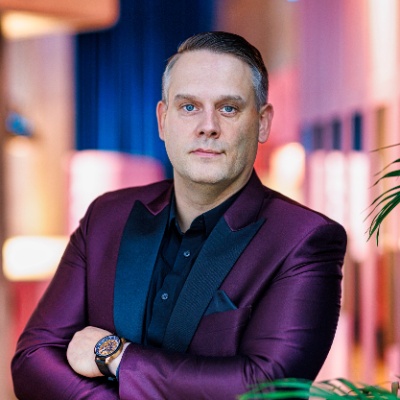
Pert Lomp
Strateegiline mentor ja süsteemide looja
Olen strateegiline mõtleja ja süsteemide looja, kes aitab inimestel ja organisatsioonidel liikuda kaosest selguse, struktuuri ja tulemuste suunas. Minu tugevus seisneb võimes näha suurt pilti ning siduda omavahel tehnoloogia, finantsid ja juhtimine tervikuks, mis päriselt töötab. Mul on üle 25 aasta kogemust erinevates rollides – alates tehnoloogia ja meedia valdkonnast kuni juhtimise, äriarenduse ja strateegilise nõustamiseni. Tegutsen täna eelkõige mentorina ja partnerina inimestele, kes on jõudnud punkti, kus järgmine samm ei vaja enam rohkem infot, vaid selgust, otsust ja suunda. Mind käivitab kasv – nii inimeste kui süsteemide tasandil. Usun, et enamik piiranguid ei tule väljastpoolt, vaid meie enda mõtteviisist, harjumustest ja uskumustest. Minu roll on aidata need mustrid nähtavaks teha, need lahti murda ning asendada need toimivate, teadlike valikutega. Minu lähenemine on kombinatsioon ratsionaalsest strateegiast ja sügavamast inimlikust mõistmisest. Töötan seal, kus kohtuvad loogika ja sisemine areng – kus otsused ei ole ainult õiged Excelis, vaid ka kooskõlas inimese tegeliku potentsiaali ja suunaga. Mentorina olen otsekohene, kohal ja tulemustele suunatud. Ma ei paku pehmendatud vastuseid, vaid selgust. Samas loon ruumi, kus inimene saab turvaliselt mõelda, näha ja kasvada. Minu jaoks on kõige suurem väärtus hetk, kus inimese sees tekib “klõps” – kui segadus asendub arusaamisega ja ebakindlus muutub teadlikuks liikumiseks edasi. Kui oled punktis, kus tead, et oled võimeline enamaks, aga vajad selgust, struktuuri ja tuge järgmise sammu tegemiseks, siis siin me kohtume.