
Coach. Therapist. Mentor.
Coach, therapist, mentor: three roles that are often confused
In Estonia, the terms coach, therapist, and mentor are often used interchangeably. Someone who is just beginning to look for support may not understand what sets these roles apart. That confusion is one reason why seeking help can stall for weeks — or even years.
There is one sentence I hear often. It goes something like this.
"I don't know whether I need a coach, a therapist, or a mentor. They all end up saying the same thing anyway, just in different words." They don't.
These three roles may overlap in places, but their focus, responsibility, and way of working are different. And when someone doesn't understand that difference, they may choose the wrong kind of support — or not start at all.
Let's walk through them one by one.
A therapist helps you work through what is holding you back
A therapist's work often focuses on deeper emotional patterns, past experiences, relationships, trauma, anxiety, depression, or recurring reactions that a person can no longer navigate alone.
If there is something in your life that won't let you live peacefully, sleep, connect with others, work, or feel safe, a therapist may be the right person.
A therapist is not simply "someone to talk to." A good therapist works within a specific training framework, ethical principles, and established methods — such as cognitive behavioural therapy, schema therapy, family therapy, EMDR, or other approaches.
Simply put: a therapist is worth turning to when you sense that something inside you — or a recurring pattern from your past — is getting in the way of living your life today.
A therapist doesn't need to hand you a life strategy. Their job is to help you understand, process, and ease what is standing in your way.
A coach helps you move forward more clearly from where you are right now
A coach's focus is primarily on the present and the near future.
A coach doesn't start from the question of "what is wrong with you," but rather: where you are now, where you want to go, and what lies between those two points.
Coaching is often a good fit when someone is generally functioning well but needs clarity, structure, decision-making support, or momentum.
For example:
you are facing a career change
you need to make a difficult decision
you feel stuck but can't figure out why
you want to change a particular behavioural pattern
you need better focus or accountability toward your goals
A good coach doesn't simply tell you what to do. They create a conversation in which you begin to see more clearly for yourself. They ask questions you wouldn't think to ask — or wouldn't dare to ask — on your own. They help you untangle your thoughts and translate them into concrete next steps.
It is also important to understand the boundary. A coach does not replace a therapist. If someone is dealing with significant trauma, severe depression, chronic anxiety, or a clinical condition, that is not the territory of coaching. In those cases, therapeutic or medical support needs to come first.
In Estonia, coaching has become considerably more professional in recent years. International standards, certifications, and professional communities exist — including ICF, EMCC, and AC-aligned training programmes and associations.
At the same time, there are people in the market whose preparation is very brief, yet who call themselves coaches all the same. It is therefore worth looking at a person's training, experience, ethical framework, and whether they belong to any professional community.
A mentor shares experience but does not make decisions for you
A mentor is someone who has, in some meaningful sense, walked the path you are on right now.
That might be a leadership journey. Entrepreneurship. A career pivot. Stepping into a new role. Growing into greater personal maturity or responsibility. A mentor doesn't need to be an exact replica of your field, but they carry experience from which they can recognise patterns, risks, and possibilities.
It is often assumed that a coach only asks questions and a mentor only talks about their own experience. That is too simple a division.
A good mentor is an excellent listener, questioner, and mirror — helping the other person arrive at clarity on their own. But unlike a coach, a mentor can also share their own experience and perspective when it is called for.
For example, a mentor might say: "My experience in a similar situation was like this. You need to make your own decision, but here is one angle worth considering." That is the strength of mentoring.
A mentor should not live your life for you or take responsibility for your decisions. But they can help you avoid the blind spots you cannot yet see yourself.
Fontes has used the term "coaching mentorship" in Estonia. It describes contemporary mentoring well: a mentor doesn't simply arrive to give advice, but creates a structured conversation — asking, listening, and reflecting. When appropriate, they share their own experience, but do so by agreement and in a way that supports the other person's growth.
Mentoring in Estonia has grown more professional over the years. Fontes has been investing in mentor training since 2007, the Estonian Mentors' Chamber is active, and international frameworks such as EMCC are in place. Good mentoring is not "let me tell you how I did it." It is a professional developmental relationship.
How to understand what you actually need
A simple decision framework might look like this.
If an emotion, trauma, anxiety, depression, or a recurring inner pattern is getting in the way of living and functioning, start with a therapist.
If you are generally functioning but need clarity, focus, help with decision-making, or momentum toward a goal, a coach may be the right fit.
If you are navigating a specific role, career, entrepreneurial path, or life transition and need someone who has walked a similar road, a mentor may be the most practical support. But in real life, the boundaries are not always this clean.
Sometimes a person needs a therapist first and a coach later. Sometimes a mentor and a coaching approach at the same time. Sometimes a single conversation with the right person is enough to understand what kind of support is actually needed. And that is precisely where the first difficulty arises.
When someone is looking for help, they may not know the name for what they need. They simply feel that something is off.
And if the very first step requires distinguishing between a coach, a therapist, a mentor, a counsellor, a supervisor, a yoga teacher, and a mental health specialist — the journey can grind to a halt before it even begins.
That is why we have built Evoluna as a system that doesn't start with a title — it starts with your situation.
When you answer a few questions, the system helps you understand which type of specialist might be the better match for what you have described. If you already know what you are looking for, you can browse profiles of suitable specialists and compare them at your own pace.
You don't need to be a personal development expert to find the right specialist for yourself.
But you do need to be able to start in a way that doesn't make the confusion worse. The best first step is often simpler than you think.
Once you know what kind of support you're looking for, the next question is: how do you recognize a good specialist? I wrote about this in Red Flags to Watch For.
Pert Lomp is the founder of Evoluna, an alumnus of the Fontes leadership mentoring programme, and an EMCC-certified mentor.
Content marketing: Evoluna
Kuidas see artikkel sind puudutab?
Kommentaarid
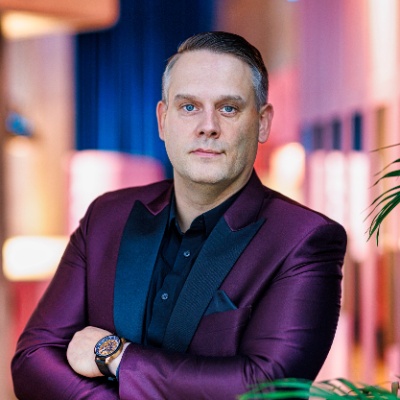
Pert Lomp
Strateegiline mentor ja süsteemide looja
Olen strateegiline mõtleja ja süsteemide looja, kes aitab inimestel ja organisatsioonidel liikuda kaosest selguse, struktuuri ja tulemuste suunas. Minu tugevus seisneb võimes näha suurt pilti ning siduda omavahel tehnoloogia, finantsid ja juhtimine tervikuks, mis päriselt töötab. Mul on üle 25 aasta kogemust erinevates rollides – alates tehnoloogia ja meedia valdkonnast kuni juhtimise, äriarenduse ja strateegilise nõustamiseni. Tegutsen täna eelkõige mentorina ja partnerina inimestele, kes on jõudnud punkti, kus järgmine samm ei vaja enam rohkem infot, vaid selgust, otsust ja suunda. Mind käivitab kasv – nii inimeste kui süsteemide tasandil. Usun, et enamik piiranguid ei tule väljastpoolt, vaid meie enda mõtteviisist, harjumustest ja uskumustest. Minu roll on aidata need mustrid nähtavaks teha, need lahti murda ning asendada need toimivate, teadlike valikutega. Minu lähenemine on kombinatsioon ratsionaalsest strateegiast ja sügavamast inimlikust mõistmisest. Töötan seal, kus kohtuvad loogika ja sisemine areng – kus otsused ei ole ainult õiged Excelis, vaid ka kooskõlas inimese tegeliku potentsiaali ja suunaga. Mentorina olen otsekohene, kohal ja tulemustele suunatud. Ma ei paku pehmendatud vastuseid, vaid selgust. Samas loon ruumi, kus inimene saab turvaliselt mõelda, näha ja kasvada. Minu jaoks on kõige suurem väärtus hetk, kus inimese sees tekib “klõps” – kui segadus asendub arusaamisega ja ebakindlus muutub teadlikuks liikumiseks edasi. Kui oled punktis, kus tead, et oled võimeline enamaks, aga vajad selgust, struktuuri ja tuge järgmise sammu tegemiseks, siis siin me kohtume.